Gymnastics or dance: which is right for your child?
Gymnastics and dance are both good for children, so this is a choice between two good options, not a right one and a wrong one. The useful question is which fits your child's body, temperament and week — and for some children the honest answer is dance.
Short answer: Neither gymnastics nor dance is better for every child: gymnastics builds more strength, body control and confidence with climbing, rolling and landing, while dance builds more rhythm, musicality and confidence in front of an audience. Choose gymnastics for a climber who needs strength and balance, dance for a child who moves to every song, and try both if you are unsure.
Which is better for kids, gymnastics or dance?
The better choice is the one your child will look forward to every week, because gymnastics and dance both build fitness and confidence, only in different ways.
Gymnastics leans towards strength and control: children hang, climb, roll, balance and land. Dance leans towards rhythm and expression: children learn to move on the beat, remember a sequence and perform it with feeling, often in front of an audience.
So look at your child before you look at the timetable. A child who hangs off the monkey bars in the society park and climbs the furniture at home is telling you something. So is a child who dances to every song in the car.
Be honest about enjoyment, too. A music-mad child pushed into gymnastics because they “need strength” may quietly stop going within a term. If your child is clearly a dancer, a good dance class is the right choice, and nobody, including us, should talk you out of it. If karate is also on your list, we compare it in gymnastics versus karate for children.
| What you are weighing | Gymnastics | Dance |
|---|---|---|
| Strength | Stronger here: arms, shoulders and core, from hanging, climbing and holding body weight | Strong legs, feet and ankles, plus stamina from moving through a whole routine |
| Flexibility | Shoulders, spine and hips, through bridges, splits and straddles | Hips, legs and feet, with turnout and extension in ballet and classical forms |
| Rhythm and musicality | Limited; music may play, but timing to a beat is rarely the focus | The clear winner: counting beats, moving in time and expressing a piece of music |
| Balance and coordination | Whole-body balance on beams, on hands and upside down, plus safe landings | Balance on one foot, turns and footwork, with arms and legs coordinated to music |
| Confidence and performing | Confidence from visible progress; recreational classes rarely involve performing | Stronger here: shows and recitals teach children to perform in front of people |
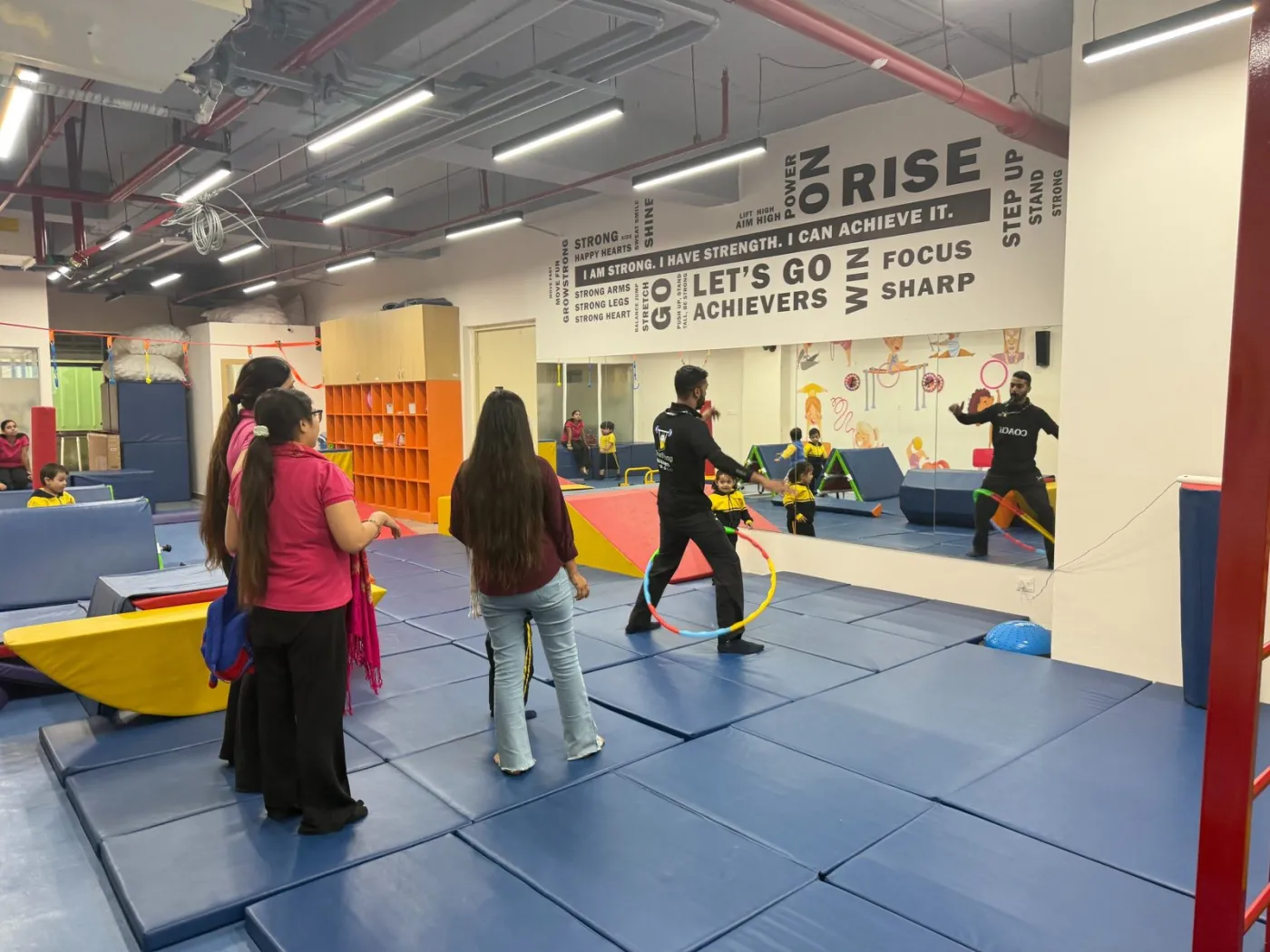
| What a class looks like | Warm-up, then rotating through mats, beam, bars and obstacle courses in small groups | Warm-up, steps and technique, then learning and repeating a short routine to music |
| Cost drivers | An equipped, padded space and close supervision; competition adds kit, entries and travel | Shoes, costumes for each show, recital or exam fees, and later classical debuts |
| Best if your child… | climbs everything, loves being upside down, or needs more strength and body confidence | moves to every song, loves dressing up, or wants to perform for an audience |
Gymnastics or dance for a 3-year-old?
For a three-year-old, gymnastics and dance are both good first classes, as long as the class is built for three-year-olds rather than shrunk down from one for older children.
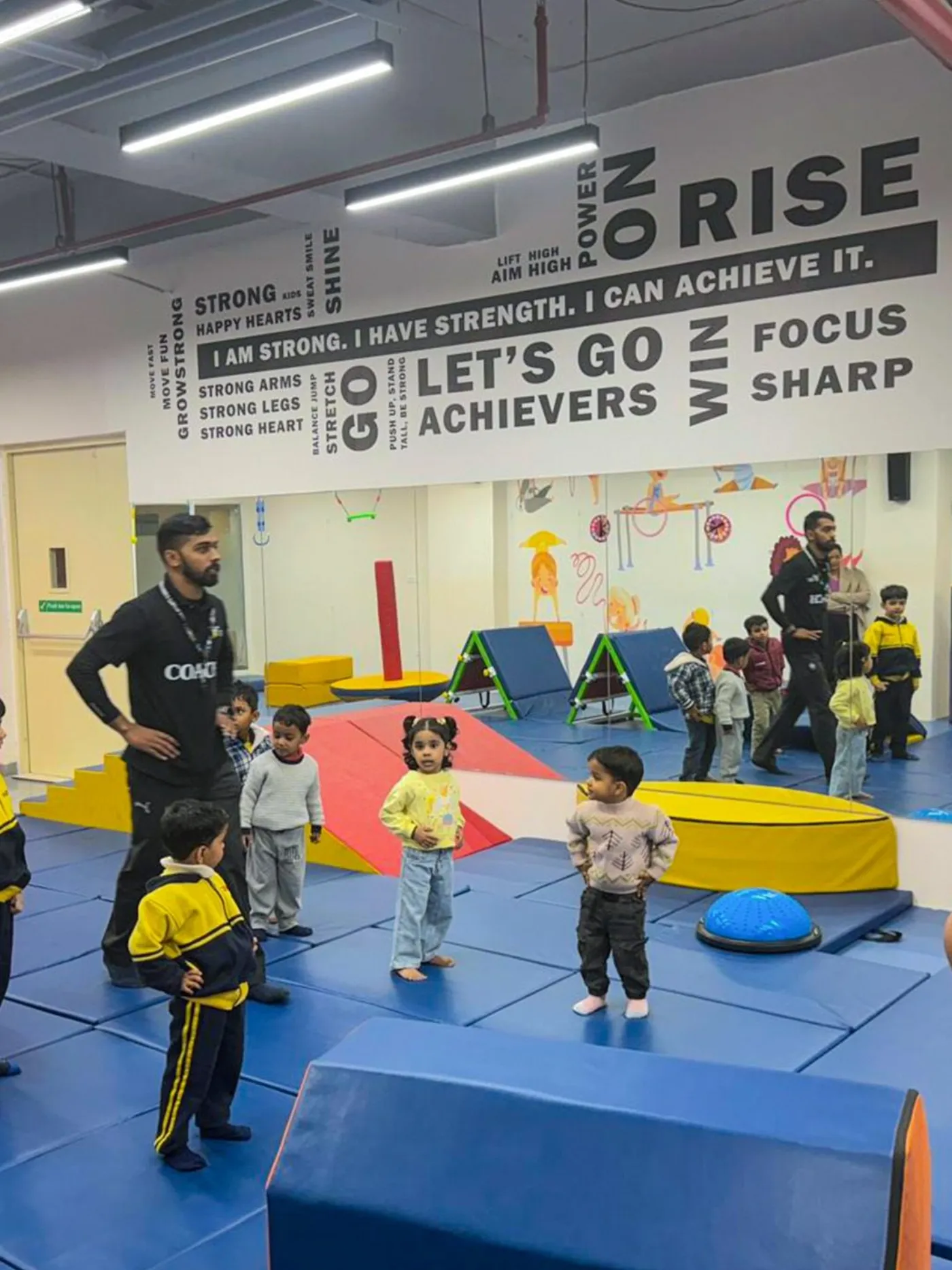
At this age neither activity is really about technique. A good toddler gymnastics class is mostly rolling, crawling through tunnels, climbing soft blocks, jumping off something low and walking along something wide. A good toddler dance class is mostly moving to music, copying the teacher, marching, twirling and becoming a butterfly or an elephant on request. Both are often a child's first practice at listening to a grown-up in a group.
What matters most is the shape of the session. Look for short activities that change often, plenty of movement and very little queuing, and a teacher who stays relaxed when a child wanders off or sits out. Be wary of anything that asks a three-year-old to repeat one step in a line, or to perform on cue.
On our side, the Little Explorers band for two- to four-year-olds is a gentle first introduction: soft-play and low apparatus only, and no pressure to perform. If your three-year-old is happiest with music on, a creative-movement dance class may suit them better, and that is a perfectly good start too. Formal classical training in Bharatanatyam or Kathak tends to suit slightly older children, because it asks for precise footwork and long stretches of careful copying.
For what gymnastics looks like at each age from two upwards, see our guide to what age a child should start gymnastics.
Gymnastics or dance for a 5-year-old?
For a five-year-old, gymnastics is usually the better pick if they need more balance, strength and confidence on their feet, and dance is the better pick if they love music and want to perform.
Five is when the difference between the two starts to show. By five, many children can follow a two-step instruction, wait for a turn and remember a short sequence, so both activities can now teach real skills rather than simply keeping a group happy.
In gymnastics, a five-year-old works on balance, jumping and landing, forward rolls and the strength to hang and climb. Balance, jumping and landing sit at the heart of our Mini Champs band for four- to six-year-olds, because they are among the motor skills school is about to demand: sitting upright through a long morning, stopping and turning on the playground, and holding their own in PE periods.
In dance, a five-year-old learns to count, keep time, remember a short routine and perform it alongside other children. For a child who is first on the floor at every family wedding, or who rehearses the annual-day dance at home for weeks, that is hugely rewarding, and dance may hold their interest far longer than a gym would.
If you are still torn, a trial class of each will tell you more than any article.
Which builds more flexibility and strength, gymnastics or dance?
Gymnastics generally builds more strength, especially in the arms, shoulders and core, while both build flexibility, with gymnastics working the shoulders and spine and dance working the hips, legs and feet.
Gymnastics is unusual because it asks children to support and move their whole body weight on their arms: hanging from a bar, climbing, holding a shape, pushing up from the floor. The CDC's examples of muscle-strengthening activity for school-age children include climbing and body-weight exercises, and its guidance for parents notes that younger children usually build muscle when they do gymnastics or climb. Core strength comes along too, because almost every gymnastic shape is held from the middle.
Dance builds a different kind of strength. Legs, feet and ankles work hard through jumps, turns and long stretches of footwork, and dancing through a whole routine builds stamina. The CDC counts vigorous dancing as vigorous-intensity activity, and the jumps in many dance styles are the hopping-and-jumping kind of movement it lists as bone-strengthening. Classical Indian forms are especially demanding: holding the half-sitting aramandi position in Bharatanatyam takes real thigh strength, and Kathak's fast footwork and spins test balance and ankles.
Flexibility is closer to a draw. Gymnastics stretches the shoulders, spine and hips through bridges, splits and straddles; ballet and classical dance work the hips, hamstrings and feet, and extension is part of the art. In both, flexibility should be built slowly, and a good coach or teacher never forces a child into a stretch. If your child has joint pain, unusually loose joints or a past injury, talk to your child's paediatrician about their own situation before starting either.
Which is more expensive, gymnastics or dance?
Neither gymnastics nor dance is reliably cheaper, because the class fee is only part of what you pay and the extras in each come from very different places.
In dance, the extras usually come from performing. Shoes and practice wear vary by style: ballet shoes, jazz shoes, ghungroos for Kathak, a practice sari for Bharatanatyam. Then come costumes for each show or recital, sometimes one for every item a child dances in. Some dance schools also charge for annual shows or follow a graded exam syllabus with its own fees. Years later, a classical debut such as an arangetram is a significant family expense in its own right.
In gymnastics, the cost sits mostly in the room. A safe gym needs padded flooring, mats, beams, bars and soft-play, all kept in good repair, and enough coaches to supervise and spot children closely. Kit is minimal at recreational level: clothes your child can move in. Costs climb only if a child moves into competitive gymnastics, which brings many more training hours, leotards, competition entries and travel.
Ask for the full picture before you commit: the class fee and what it includes, uniform or kit, show or exam charges, what happens if you miss a class, and how long you are signing up for. Then count the commute. A class across town in evening traffic costs you time every week, and the class you can reliably reach is usually the one your child keeps going to.
Can my child do both gymnastics and dance?
Your child can do both gymnastics and dance, and the two complement each other well: gymnastics adds strength and control to a dancer's jumps and turns, and dance adds rhythm and expression to a gymnast's movement.
A child with gymnastics behind them often jumps higher and lands more softly in a dance class, and a child who dances often brings better timing and finish to the gym. Doing both also fits what paediatricians suggest for young children: the American Academy of Pediatrics encourages families to let children sample different sports so they can discover what they enjoy.
The practical limits are time and energy. A young child doing two activities alongside school, homework and free play can tire quickly, so avoid putting both on the same evening, keep some days completely unscheduled, and watch for signs that the week is too full: dragging feet before class, falling asleep in the car, or losing interest in both. How often is enough is a separate question, which we answer in how many times a week a child should do gymnastics.
If your child eventually has to drop one, let them choose which; children tend to stick with what they pick.
Is gymnastics worth it for kids?
Gymnastics is worth it for children who enjoy it, because the strength, balance, coordination and body awareness it builds carry over into other sports and into ordinary play.
The American Academy of Pediatrics' parent site says gymnastics helps children build strength, flexibility, balance and coordination, and stresses experienced coaches, proper supervision and spotting. That is the real test of value: not how much equipment a gym has, but whether someone who understands children's development is watching your child closely and progressing them safely. If you are comparing gyms, our guide to choosing a kids' gym lists the questions worth asking.
There are quieter benefits too. Gymnastics teaches children to fall and land without getting hurt, to feel at home upside down, and to see their own progress week by week. Our curriculum is aligned to CDC and Indian Academy of Pediatrics developmental guidelines, and each session closes with an award moment that recognises effort and improvement rather than winning, so the child who is just starting is noticed as much as the one who can already cartwheel.
It is not worth it in every case. If your child has given it a fair try and still dreads going, if a programme is steering a young child towards long competitive hours they do not want, or if the journey makes regular attendance impossible, your money and time are better spent elsewhere, perhaps on dance or a team sport your child loves. The habit of moving is what matters most, especially before school gets busier and board exams loom, and children keep the habits they enjoy.
The simplest way to judge is to see a class. Our Centre Programme runs 75-minute classes in five age bands for children aged two to twelve at our Greater Noida West and Lucknow centres, and a free trial class lets your child join a real session while you watch.
Sources
- Gymnastics: Keeping the Sport Safe & Fun for Kids — American Academy of Pediatrics (HealthyChildren.org), 2024
- Child Activity: An Overview — Centers for Disease Control and Prevention, 2025
- What Counts for Children and Teens — Centers for Disease Control and Prevention, 2024
- American Academy of Pediatrics Encourages Organized Sports – For the Fun of It — American Academy of Pediatrics (HealthyChildren.org), 2019
Questions parents ask
My son wants to dance. Is that unusual for a boy?
It is not unusual at all for a boy to want to dance, and boys bring the same energy, strength and musicality to it as girls. Classical Indian dance has a long tradition of celebrated male dancers. If he also loves to tumble and climb, gymnastics suits boys just as well, and at senior level men's gymnastics has its own apparatus, such as the rings and the pommel horse. Let him choose by what he enjoys.
What is acro dance, and is it the same as gymnastics?
Acro dance is a dance style that blends dance technique with acrobatic skills such as cartwheels, walkovers and balances, so it sits between the two rather than replacing either. It is taught in dance classes and performed to music as part of a routine. Children who love it often gain from gymnastics alongside, because the strength and safe landings gymnastics teaches make acrobatic tricks easier and safer to learn.
Is gymnastics or dance more likely to cause injuries?
Gymnastics and dance both carry some risk of injury, and at beginner level both are reasonably safe when the class is well supervised and matched to the child's age. The pattern differs: gymnastics puts more load through the wrists, because children take their weight on their hands, while dance asks more of the feet, ankles and knees through repeated jumps and turns. Gradual progression and proper warm-ups matter more than which activity you choose.
Is it worth trying a class of each before deciding?
Trying a class of each before deciding is the surest way to find out which one your child will enjoy, so watch their face rather than their skill. Notice which class they talk about on the way home, which moves they repeat in the living room, and which one they ask to go back to. Our guide to what happens in a first gymnastics class explains what to look for while you watch.
My child can already do the splits. Is gymnastics or dance the natural fit?
Natural flexibility helps in both gymnastics and dance, so it should not decide the choice on its own, because both need strength to control that range safely. A good coach or teacher will build strength alongside flexibility rather than pushing the stretch further. Let your child's enthusiasm decide, and if their joints often ache, click or give way, talk to their paediatrician before they start.
Does dance or gymnastics do more for posture?
Dance usually does more for posture awareness, because teachers correct how children stand, hold their heads and carry their arms in almost every class, while gymnastics builds the core strength that makes good posture easier to hold. Ballet in particular trains a lifted, upright carriage. For a child who slouches, either will help more than reminders at home, and doing both covers awareness and strength together.