Once or twice a week? How often children should do gymnastics
Parents usually ask this in one of two moods: worried that once a week is too little to matter, or worried that a keen child is starting to do too much. Both worries are reasonable, and the answer is more settled than it sounds.
Short answer: For a child doing gymnastics for fitness, confidence and fun, once or twice a week is the right amount. One 75-minute class a week, kept up across a term, builds real skill. A second class suits a child who is keen, settled and still has free play and rest in their week. Three or more sessions is training volume, usually for children who want to compete.
How many times a week should my child do gymnastics?
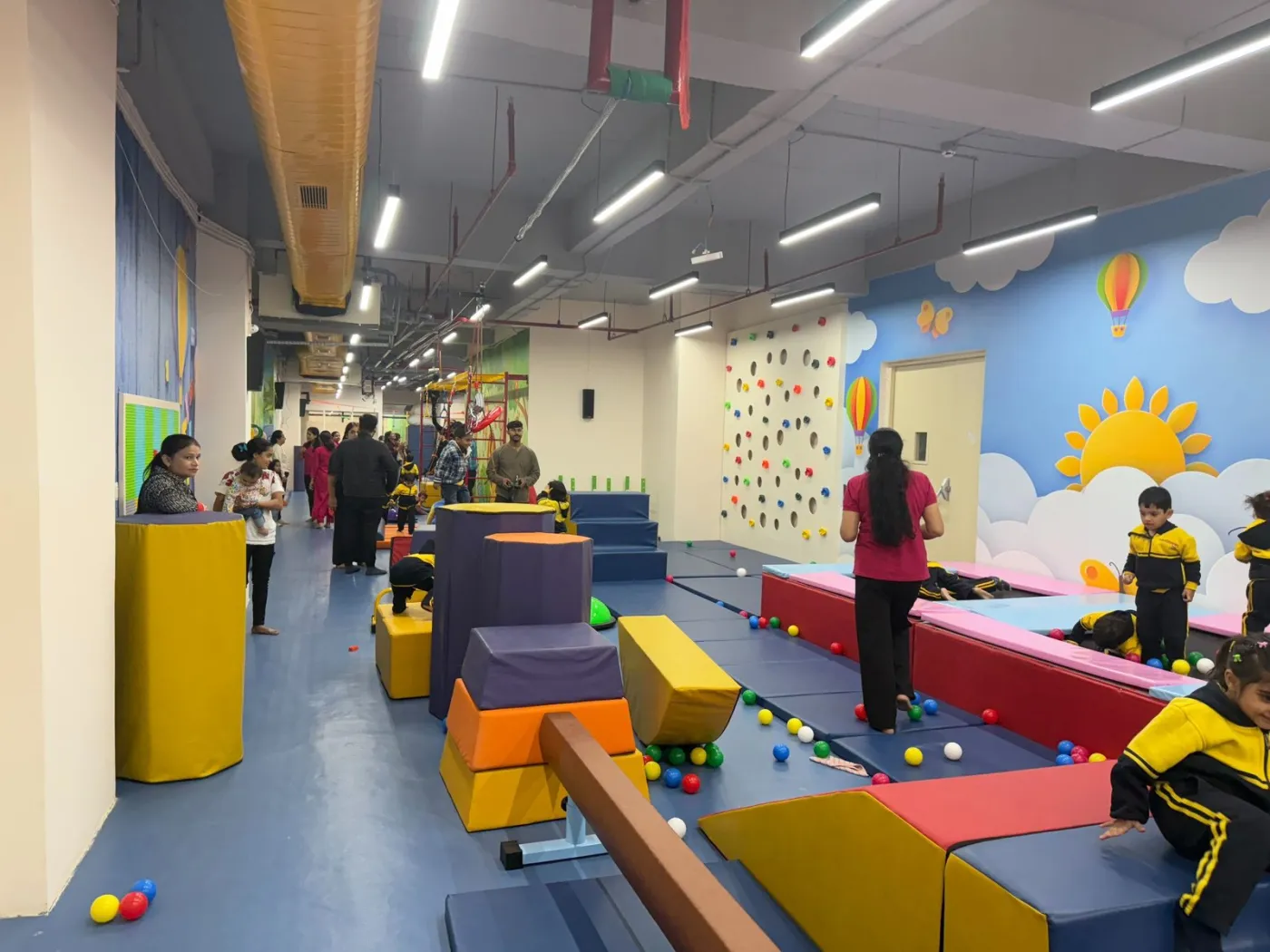
Once or twice a week is the right amount for children who do gymnastics for strength, coordination and enjoyment rather than competition. The number matters less than you might expect. What matters more is that the class happens most weeks, that it suits your child's age, and that the rest of the week still has room for play.
Age shifts the picture a little. For under-fives, one class a week is plenty, because at that age a class is one small part of a day that should be full of active play. From about six, a child who loves it can comfortably add a second session, while three or more is the territory of competitive squads.
Our Centre Programme classes can be attended once or more a week. Ask the team which batches are running in your child's age band before you plan your week around a second class.
| What you are weighing | Once a week | Twice a week | Three or more |
|---|---|---|---|
| Who it suits | Beginners, under-fives and busy families | Settled, keen children with room in their week | Children training to compete in a club squad |
| Time, with 75-minute classes | 1 hour 15 minutes | 2 hours 30 minutes | 3 hours 45 minutes or more |
| What it builds | Steady strength, coordination and confidence across a term | Quicker progress on named skills, with less forgotten between classes | Competition routines and serious conditioning |
| Room for free play | Plenty | Usually enough, if the rest of the week is light | Tight, and needs protecting |
| Travel and family time | One trip a week | Two trips, easier if you live close | Shapes the whole family's week |
| Main risk | Slow progress if weeks are often missed | Squeezing out rest and unplanned play | Overuse aches and burnout without rest days |
Is gymnastics once a week enough?
Once a week is enough for a child to make steady, visible progress, as long as they come most weeks and keep moving on the other days. A weekly class works because it repeats. Each week your child meets the same five-stage structure and the same warm-up, and the drills progress across the term, so a shape that wobbled early on can be steady by the end of it.
What undoes a weekly class is not its size but gaps: a child who misses every other week is, in effect, restarting each time.
Where once a week falls short is as a child's only exercise. For school-age children, the WHO guidelines set out below ask for an hour of activity a day on average, with strengthening work on at least three days a week, which no single class can cover alone. The other days need to come from somewhere: a cycle ride, a game of tag in the society compound, a walk to school. If you are unsure whether the rest of the week adds up, our guide to whether your child is active enough walks through the arithmetic.
How many hours of gymnastics a week is right for a child?
For a child doing recreational gymnastics, one to three hours a week is plenty, and organised training should never exceed their age in hours. That ceiling comes from the American Academy of Pediatrics, whose general rule is that children should not train more hours each week than their age. A seven-year-old would top out at seven hours, and a ten-year-old at ten.
Recreational classes sit far below that line. One 75-minute class is an hour and a quarter a week, and two are two and a half hours, which leaves plenty of headroom for a child of six or older.
Elite gymnastics is a different activity altogether. A 2013 review of the research describes elite gymnasts training 20 to 30 hours a week, for 45 to 48 weeks of the year, and that is where most of the worrying headlines come from. If height is your concern, we look at the evidence in does gymnastics stunt growth?
Hours are also a blunt measure. Two children in the same class can come home very differently, one fizzing and one flat. Watch your child rather than the clock: tiredness that lasts into the next day, or aches that keep returning, mean the load is wrong for them whatever the hours say.
How much physical activity do children need each day?
The WHO recommends at least three hours of physical activity a day for children aged one to four, and an average of at least 60 minutes of moderate-to-vigorous activity a day for children aged 5 to 17. In more detail:
- Ages 1–2: at least 180 minutes of varied activity at any intensity, spread through the day, and no more than an hour at a time restrained in a pram, high chair or carrier.
- Ages 3–4: the same 180 minutes, of which at least 60 should be moderate to vigorous — the kind of play that leaves them puffed.
- Ages 5–17: an average of at least 60 minutes a day of moderate-to-vigorous activity, mostly aerobic, plus vigorous activity and muscle- and bone-strengthening work on at least three days a week.
The hour for school-age children is an average across the week, so a long, active Saturday helps but cannot make up for six sedentary days. The WHO also asks families to limit sedentary time, particularly recreational screen time, and is clear that some activity is better than none.
This is where a fixed weekly class earns its place. Lucknow's summer afternoons, monsoon weeks and long school days all eat into outdoor play, and a class is one block of active time that does not depend on the weather. For toddlers the picture is different again, and our guide to classes for 2-year-olds covers what suits that age. If your child has a health condition, or you are unsure how much activity is right for them, talk to their paediatrician.
How many extracurricular activities should a child have?
One or two regular activities is usually plenty for a primary-school child, provided there is still unstructured time to play every day. We know of no official guideline that sets a number, but the American Academy of Pediatrics has raised the cost of overscheduling more than once.
In 2007, an AAP report listed a hurried lifestyle and increased attention to academics and enrichment activities among the reasons free play has shrunk for some children. More recently, AAP sports doctors suggested overscheduling as a potential risk factor for burnout. One of the authors put the line plainly: it becomes a problem when a child no longer has any free play time.
In many Indian households the real competition is not gymnastics against football but activities against tuition, abacus and music grades. A useful test is to look at the week as your child lives it:
- Are there afternoons with nothing planned at all?
- Given free time, does your child still choose to play?
- Do they look forward to their activities, or just get through them?
A balanced week often has one physical activity, perhaps one creative one, and plenty of time that belongs to the child. Gymnastics fits alongside most things, because the strength, flexibility, balance and coordination it builds are useful everywhere else. If you are choosing between gymnastics and something else, our side-by-side look at gymnastics and dance for children may help.
When should a child move from once to twice a week?
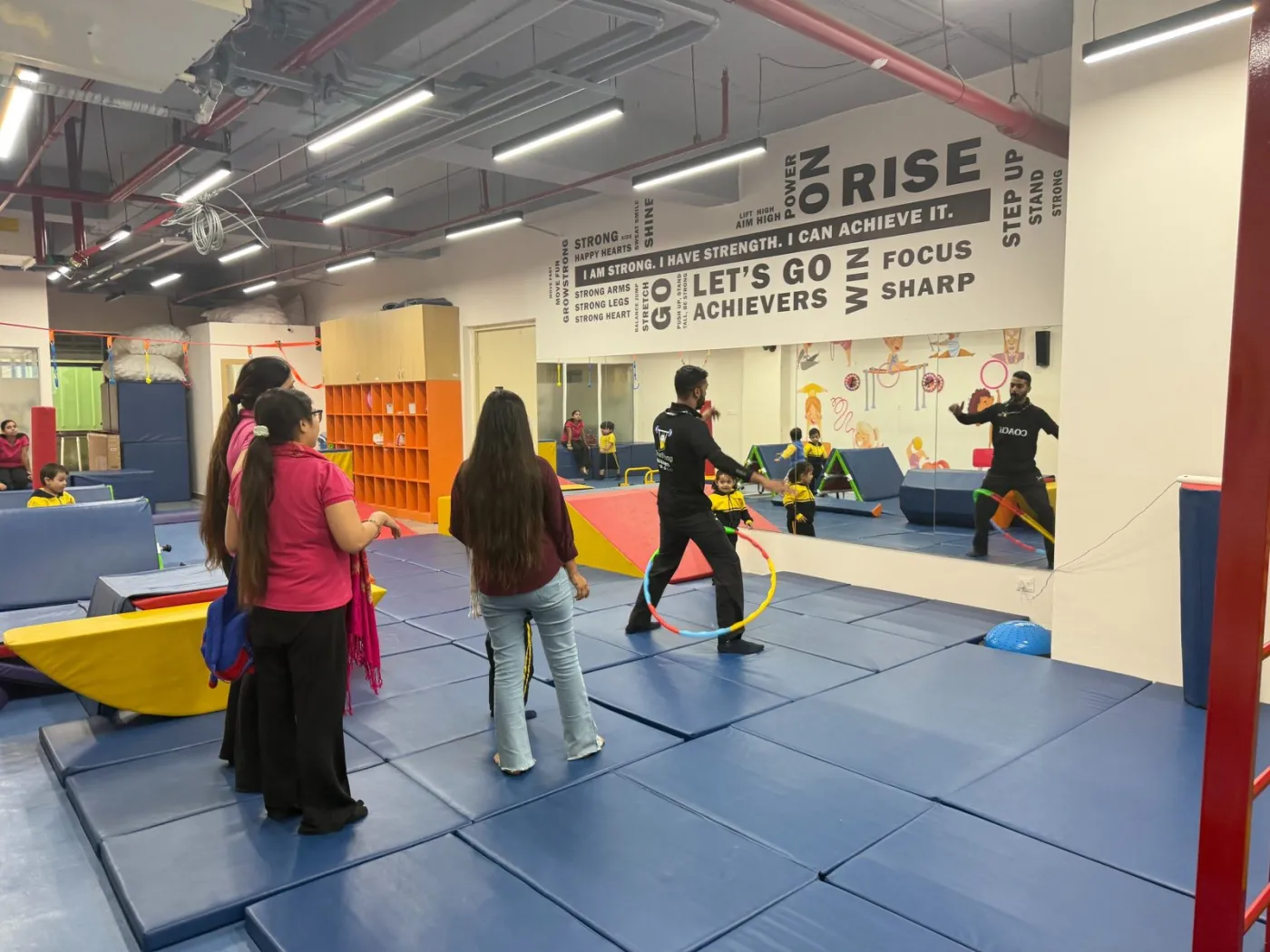
Move to twice a week when your child has settled into the weekly class, keeps asking for more, and still has rest and free play in their week. These are good signs that the time has come:
- They have come regularly for at least a term, and the class feels routine rather than new
- They practise rolls and shapes at home without being asked
- A coach mentions that a skill is close and would come faster with more practice
- The extra trip will not turn your family's week into a scramble
Hold off if your child is still settling, is tired or tearful before class, or is heading into a heavy stretch at school. A second session for a child who is only just coping with one tends to cost more enthusiasm than it adds skill.
If you do step up, treat it as a trial. Give it four to six weeks, ask your child and the coaches how it is going, and step back without fuss if it is not working.
Is gymnastics good for a 7-year-old?
Gymnastics suits many seven-year-olds well, because it builds strength, balance and coordination at an age when children can learn named skills and see themselves improve. The health guidance points the same way.
The CDC notes that younger children usually strengthen their muscles through activities such as gymnastics, playing on a jungle gym or climbing trees, and a class adds the jumping that the CDC counts as bone-strengthening activity. The American Academy of Pediatrics suggests about six as the age when children are ready for organised sport, so seven is a comfortable time to begin or to step up.
At GrowStrong, seven-year-olds usually join Skill Builders (ages 6–8), where gymnastic shapes get their proper names, partner tasks begin, and teamwork becomes part of the class. Coaches place each child on the day, so a confident seven-year-old and a cautious one both end up where they fit.
It is not the right fit for every child, and that is fine. A seven-year-old who lights up in team ball games, or who wants to compete and win every week, may be happier in a sport built around that, with gymnastics as an extra or not at all.
Why do children quit gymnastics, and how do you avoid burnout?
Children tend to give up gymnastics when it stops being fun, whether because of too many hours, too much pressure to perform, or a class that no longer fits them. Dropping out is common across youth sport: the American Academy of Pediatrics notes that about 70% of children in the US who play organised sport have dropped out of it by age 13.
The AAP describes burnout as children no longer feeling a sense of fun and accomplishment when they play or practise. In gymnastics specifically, its doctors link burnout to long hours, year-round training and pressure to advance, particularly in children who began specialising very young. Other reasons are more ordinary: a friend leaves, a skill feels frightening, school gets busier, or a child decides they are “not good at it” after comparing themselves with someone more experienced.
What helps, in our experience and in the AAP's advice:
- Keep the hours sensible. Stay well under the hours-equal-age ceiling, with whole days off.
- Praise effort, not results. Our award moment recognises effort and improvement rather than winning, and the same habit at home matters even more.
- Let them do other things. The AAP notes that children who take part in more than one sport are less likely to lose interest or drop out.
- Give your child a say. Ask what they enjoy and what they would change, and take the answer seriously.
- Allow a pause. AAP guidance on gymnastics says children should enjoy it, and should be allowed to stop if they choose.
If your child has gone from eager to reluctant, look at what changed before deciding they have outgrown it; often it is the week around the class, not the class itself. If you are still deciding how often to start, a free trial class lets you watch a full session and ask the coaches what they suggest.
Sources
- To grow up healthy, children need to sit less and play more — World Health Organization, 2019
- Physical activity: fact sheet — World Health Organization, 2024
- Child Activity: An Overview — Centers for Disease Control and Prevention, 2025
- Burnout in Young Athletes: How to Keep the Fun in Sports — American Academy of Pediatrics, HealthyChildren.org, 2024
- AAP Calls Out Causes of Overuse Injuries & Burnout in Youth Sports — American Academy of Pediatrics, HealthyChildren.org, 2024
- Gymnastics: Keeping the Sport Safe & Fun for Kids — American Academy of Pediatrics, HealthyChildren.org, 2024
- The importance of play in promoting healthy child development and maintaining strong parent-child bonds — Ginsburg, American Academy of Pediatrics, Pediatrics, 2007
- Role of intensive training in the growth and maturation of artistic gymnasts — Malina et al., Sports Medicine, 2013
Questions parents ask
Do children need rest days from gymnastics?
Children need one or two days of rest from organised training every week, which is what the American Academy of Pediatrics advises for young athletes. With one or two classes a week, those rest days happen on their own. They matter more for children who train most days, who also benefit from longer breaks: the AAP suggests at least two to three months off during the year, which can be split into one-month blocks.
Does a 75-minute class cover my child's activity for that day?
A 75-minute class covers a good share of that day's activity, but not all of it is the moderate-to-vigorous kind the WHO counts. The affirmations, the hello circle and the craft task are calmer by design, while the warm-up and the themed gymnastics work are where children get properly puffed. Treat a class day as an active day, not a finished one, and keep the other days moving too.
What should my child do on the days without a class?
On the days without a class, aim for ordinary active play that gets your child a little out of breath and uses their muscles. Cycling, skipping, running games, swimming, dancing and the climbing frame in the society park all count. The CDC suggests muscle-strengthening activity such as climbing and bone-strengthening activity such as jumping on at least three days a week from age six, so a mix across the week works well.
How long does it take to see progress from one class a week?
Give a weekly class a full term before you judge it, because progress at one session a week is steady rather than quick. The first changes parents notice are often willingness and confidence, such as a child who now tries the climbing frame, before any new skill appears. If a term passes with no change in enthusiasm or ability, ask the coaches whether the band or the frequency needs a rethink.
Should my child take a break from gymnastics during exam season?
A short break around school exams is a reasonable choice, but ask your child before deciding, because some children value a weekly class as a fixed hour away from the desk. If they are anxious or overloaded, pause for a few weeks and come back afterwards. Coming back is straightforward, because every class follows the same five stages and the shape of the hour feels familiar straight away.