Does gymnastics make children shorter?
Search for this and you will find confident answers in both directions. The research is calmer than either, and for a child in a weekly class it is reassuring.
Short answer: On the weight of the evidence, gymnastics does not stunt a child's growth. A 1993 study raised concerns about girls training more than 18 hours a week through puberty, but a 2013 review concluded that adult height is not compromised, even by intensive training. Elite gymnasts tend to be short because the sport favours smaller bodies. A weekly recreational class is a different activity altogether.
Does gymnastics stunt growth?
On the weight of the evidence, gymnastics does not stunt growth, and recreational classes come nowhere near the training loads that once raised the question.
The worry is understandable: gymnasts on television are often strikingly small, and one study from 1993 did suggest that very heavy training could limit height. It still circulates online without the context that came after it.
It helps to separate two questions: are elite gymnasts shorter than average, and does gymnastics make children shorter than they would otherwise have been? The answer to the first is yes, on average. On the second, a 2013 review of the research, covering girls and boys, concluded that it does not.
Why are so many elite gymnasts short?
Elite gymnasts tend to be short because the sport favours smaller bodies, and the research suggests that selection explains this better than training does.
The 2013 review notes that manoeuvres involving rotation appear to favour gymnasts who are shorter and have a lower centre of gravity. A smaller body is quicker to turn, so at the top of the sport, small is an advantage.
The same review found several signs of selection at work:
- Children who take up gymnastics, recreational or competitive, tend to be shorter than average before intensive training begins, although still within the normal range.
- Gymnasts of both sexes tend to have shorter parents than the general population, which suggests their small size is probably a family trait.
- Those who stay in the sport through adolescence are, as a group, shorter and later to mature than those who drop out.
What the research cannot say is why the taller children leave: whether they choose to, or are steered out by coaches and selection. Either way, a squad of 16-year-olds who all happen to be small tells you who stayed, not what the training did. It works the same way in basketball, where nobody believes the sport made the players tall.
What does the research actually say?
The research says that very heavy training was once suspected of limiting height, but a later and much wider review found that adult height is not compromised.
The concern comes largely from a 1993 study by Theintz and colleagues in Geneva. They followed 22 girl gymnasts, aged about 12 and training around 22 hours a week, alongside 21 swimmers training about 8 hours a week, measuring them every six months for a little over two years. The gymnasts grew more slowly, particularly in leg length, and their predicted adult height fell during the study.
The authors concluded that heavy training of more than 18 hours a week, starting before puberty and continuing through it, could slow growth enough that full adult height would not be reached. They were careful about why, suggesting hormonal effects of intensive exercise, together with or because of dieting, while saying the mechanisms were not settled.
It was a small study of elite girls in very intensive training, and its conclusion rested on predictions of adult height rather than measuring the young women once they had finished growing. That does not make it wrong, but it makes it a starting point rather than a verdict.
The fuller picture came in 2013, when the scientific commission of the International Gymnastics Federation asked a committee of researchers in child growth and maturation, with Robert Malina as lead author, to review the evidence. Allowing for the limits of the data, they concluded:
- Adult or near-adult height of female and male artistic gymnasts is not compromised by intensive gymnastics training.
- Training does not appear to reduce the growth of either the upper body or the legs.
- Training does not appear to slow pubertal growth, or change its timing.
- There is not enough evidence to judge whether intensive training alters the hormones involved in growth.
The review was frank about its gaps. Many studies were short and small, and the authors recommended that each gymnast's growth rate be monitored so that any worrying change is noticed and referred for medical attention. That is sensible advice for any active child.
Does gymnastics delay puberty?
Elite gymnasts often go through puberty later than average, but the 2013 review concluded that training itself does not appear to change its timing.
The review found later maturation on several measures, including skeletal age and the age of the growth spurt, but the gymnasts' maturity still overlapped the normal range seen in other children. As a group, their pattern looked like that of short, late-maturing children who are not athletes at all. That again points to selection: late developers are more likely to stay in a sport that rewards a small, light body.
Late is not the same as short in the end. The American Academy of Pediatrics notes that children who enter puberty later may keep growing for longer, and that many children who grow slowly and mature late catch up to a typical adult height.
Where the sources do raise a flag is food. The 1993 authors linked their findings partly to dieting, and the NHS lists not getting enough nutrients among the conditions that can cause early or delayed puberty. For a child doing gymnastics for fun, the lesson is simple: an active child needs enough to eat.
Is recreational gymnastics different from elite training?
Recreational gymnastics is a different activity from elite training in hours, intensity and pressure, and the growth concerns in the research are about intensive training at the elite end.
| What you are weighing | Elite training | A GrowStrong class |
|---|---|---|
| Weekly hours | Often 20 to 30 hours, according to the 2013 review | 75 minutes per class, once or more a week |
| Aim | Competition scores and selection for teams | Strength, coordination and confidence |
| Body size | Rotation-heavy skills favour shorter gymnasts | Children of any height take part fully |
| What is rewarded | Results, scores and ranking | Effort and improvement, not winning |
| Growth findings | Studied closely; adult height found not compromised | Hours far below anything linked to slower growth |
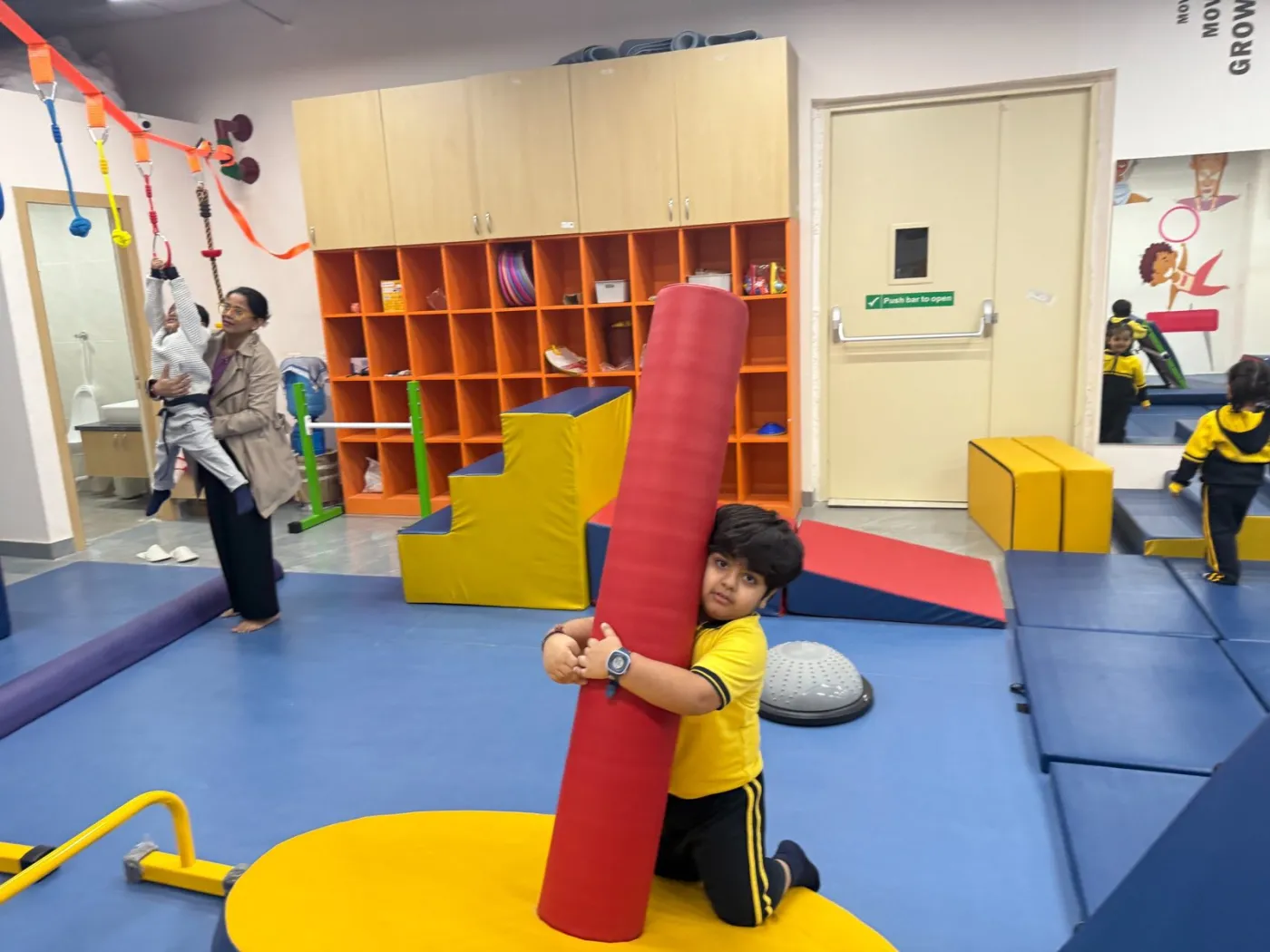
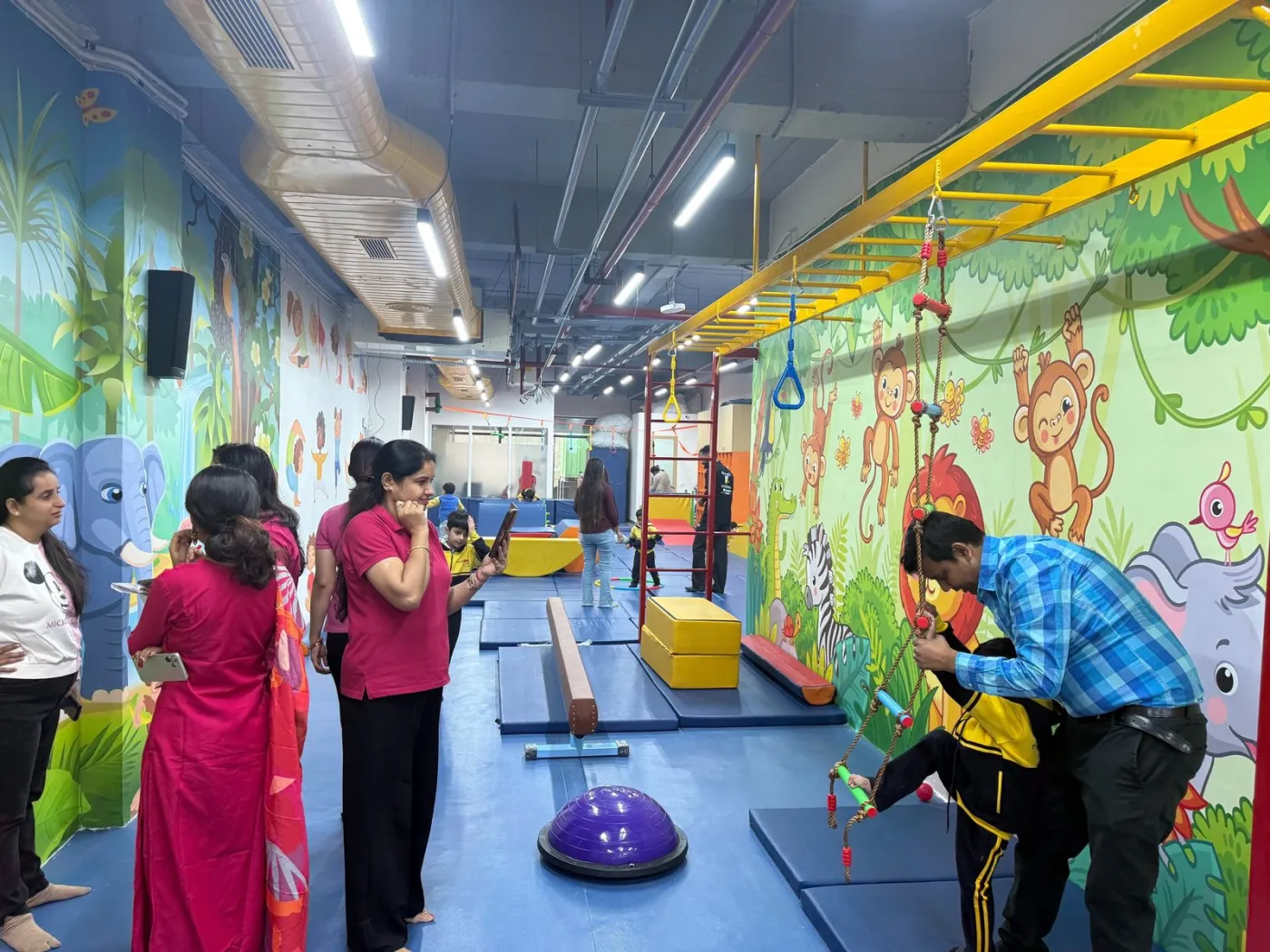
Elite gymnasts also train for 45 to 48 weeks of the year, the 2013 review notes. A class in our Centre Programme is 75 minutes, attended once or more a week, and our oldest band, ages 10 to 12, works on conditioning that respects growing bodies. For sensible weekly hours at each age, see how many times a week a child should do gymnastics.
Starting young is not what the 1993 study warned about; heavy training before and through puberty was. If you are wondering when to begin, our guide to what age a child should start gymnastics covers it.
Pressure is the other difference. At the elite end, body size and weight can become part of the conversation; in a recreational class they never should. Whichever gym you choose, expect coaches who praise effort, never comment on a child's weight, and treat food as fuel. Our guide to choosing a kids' gym has more on what to look for.
Can gymnastics make my child taller?
Gymnastics will not make your child taller than their genes and health allow, and you should be wary of any exercise or product that promises extra height.
Height is largely inherited. The American Academy of Pediatrics notes that studies suggest about 60 to 70 per cent of differences in height are determined by parents' height, and that nutrition, hormones, long-term illness, some medicines and sleep also play a part. Physical activity is on that list too, among everyday factors that can affect growth, but nothing on the list suggests a particular exercise adds centimetres.
What activity does do for a growing child is well documented. The WHO says physical activity in children and adolescents promotes bone health, encourages healthy growth and development of muscle, and improves motor and cognitive development. Gymnastics is full of climbing and jumping, which the CDC counts as muscle-strengthening and bone-strengthening activity.
Be sceptical of anything sold as a way to add height, whether it is a powder, a pill or a stretching routine. If you are worried about your child's height, talk to their paediatrician before buying anything.
When should I talk to a doctor about my child's growth?
Talk to your child's paediatrician if their growth seems to be slowing, they are dropping down the growth chart, or puberty starts much earlier or later than expected. The American Academy of Pediatrics suggests a conversation if:
- Your child is much shorter than other children their age
- Their growth seems to be slowing
- They drop to lower percentiles on the growth chart over time
- Puberty starts much later than expected
- They have other symptoms, such as low energy or a poor appetite
- You simply have questions about how they are growing
On timing, the NHS says it is normal for puberty to start any time between 8 and 14. Signs before 8 could mean early puberty, and no signs by 15 could mean delayed puberty; either is usually nothing to worry about, but both are worth checking.
A single measurement does not tell the full story, but the trend over time does, so ask for your child's height to be plotted at check-ups. In India, the Indian Academy of Pediatrics recommends the WHO growth standards for children under five and its own revised charts for ages 5 to 18.
For active children, add a few things to watch: rapid weight loss, unusual eating habits, tiredness that does not lift with rest and, in older girls, missed periods. These are not signs that gymnastics is stunting growth, but they can mean a child is not eating enough for what they are doing, and they deserve a doctor's attention.
Growth problems are often easier to treat when they are found early, and once the growth plates close after puberty a child cannot grow taller. So if something worries you, do not wait for the next routine visit. If your child is healthy and keen, a free trial class is an easy way to see what a weekly session involves.
Sources
- Evidence for a reduction of growth potential in adolescent female gymnasts — Theintz et al., The Journal of Pediatrics, 1993
- Role of intensive training in the growth and maturation of artistic gymnasts — Malina et al., Sports Medicine, 2013 (full text)
- How Tall Will My Child Be? Predicting a Child's Adult Height — American Academy of Pediatrics, HealthyChildren.org, 2026
- Short Stature in Children: What It Means & When to Check Growth — American Academy of Pediatrics, HealthyChildren.org, 2026
- Gymnastics: Keeping the Sport Safe & Fun for Kids — American Academy of Pediatrics, HealthyChildren.org, 2024
- Burnout in Young Athletes: How to Keep the Fun in Sports — American Academy of Pediatrics, HealthyChildren.org, 2024
- Early or delayed puberty — NHS, 2026
- Physical activity fact sheet — World Health Organization, 2024
- Child Activity: An Overview — Centers for Disease Control and Prevention, 2025
- Revised IAP growth charts for height, weight and body mass index for 5- to 18-year-old Indian children — Indian Academy of Pediatrics Growth Charts Committee, Indian Pediatrics, 2015
Questions parents ask
Is the evidence the same for boys as for girls?
The evidence covers both sexes, but there is far more research on girls than on boys. The 2013 review concluded that adult height is not compromised in female or male artistic gymnasts, while noting that boys have been studied less and that more data are needed before firm statements can be made separately for each sex. For a boy in a recreational class, the reassurance is the same.
How much of my child's height comes from us as parents?
A large share of your child's height comes from you, which is why the most common way to estimate adult height starts from the parents' heights. Those estimates are rough, with a margin of error of about 10 centimetres either way, and nutrition, sleep and health also play a part. Your paediatrician can give a more precise picture by tracking growth over time, sometimes with an X-ray of the hand and wrist to check bone age.
My child is small for their age. Is gymnastics still a good idea?
Gymnastics is a perfectly good choice for a small child, and in some skills a smaller body is genuinely an advantage. Being small is often simply a family trait. What deserves a paediatrician's attention is not smallness itself but growth that seems to slow, or a child slipping down the growth chart from one check-up to the next.
My child is tall for their age. Will that hold them back in gymnastics?
Height will not hold a tall child back in a recreational class, where the aim is strength, coordination and confidence rather than competition scores. Size only starts to matter at the elite end, where skills involving fast rotation favour shorter gymnasts. A tall child gains as much from the strength, balance and body control as anyone else in the group.
Should my child stop gymnastics during a growth spurt?
Your child does not need to stop gymnastics simply because they are growing fast, but pain during a growth spurt is a signal to ease off rather than push on. The AAP notes that knee pain in young gymnasts can be worse during periods of rapid growth, and that heel pain from an inflamed growth plate is also seen. Pain that lasts, swelling or a limp are reasons to see your paediatrician.
What is RED-S, and does it affect young gymnasts?
RED-S, or relative energy deficiency in sport, is when an athlete uses more energy than they take in from food. The AAP notes that it can affect reproductive, bone and psychological health, and that some gymnasts try to stay thin or light for difficult moves. For a child in a weekly class, the protection is simple: regular meals, enough food on active days, and no talk about body size.