Why gymnastics builds confidence better than most activities
Parents come to us for the physical side and stay for something else. The change they report is almost never about strength — it is about a child who now volunteers to try things.
Confidence is not built by being told you are great
Generalised praise — “you are so clever”, “you are amazing” — produces very little durable confidence, and children work out remarkably early that it is not tied to anything. What builds confidence is evidence: doing something you could not do before, and knowing you did it.
The difficulty in most of childhood is that this evidence is scarce and slow. School progress is abstract and takes terms to become visible. Team sports distribute credit unevenly, and a child can play a whole season without a single moment that clearly belongs to them.
What gymnastics does differently
Gymnastics has an unusual property: the feedback is immediate, binary and entirely personal. You either held the shape or you did not. There is no teammate to credit and no ambiguity to hide in.
That sounds harsh and is the opposite. Because the standard is objective, so is the progress. A child who could not do it last week and can do it this week has evidence that belongs to nobody else — and crucially, evidence that effort caused it. That is the actual lesson: not “I am good at this” but “practice changed what I can do”.
Once a child believes that, it stops being about gymnastics.
The body is where confidence is stored
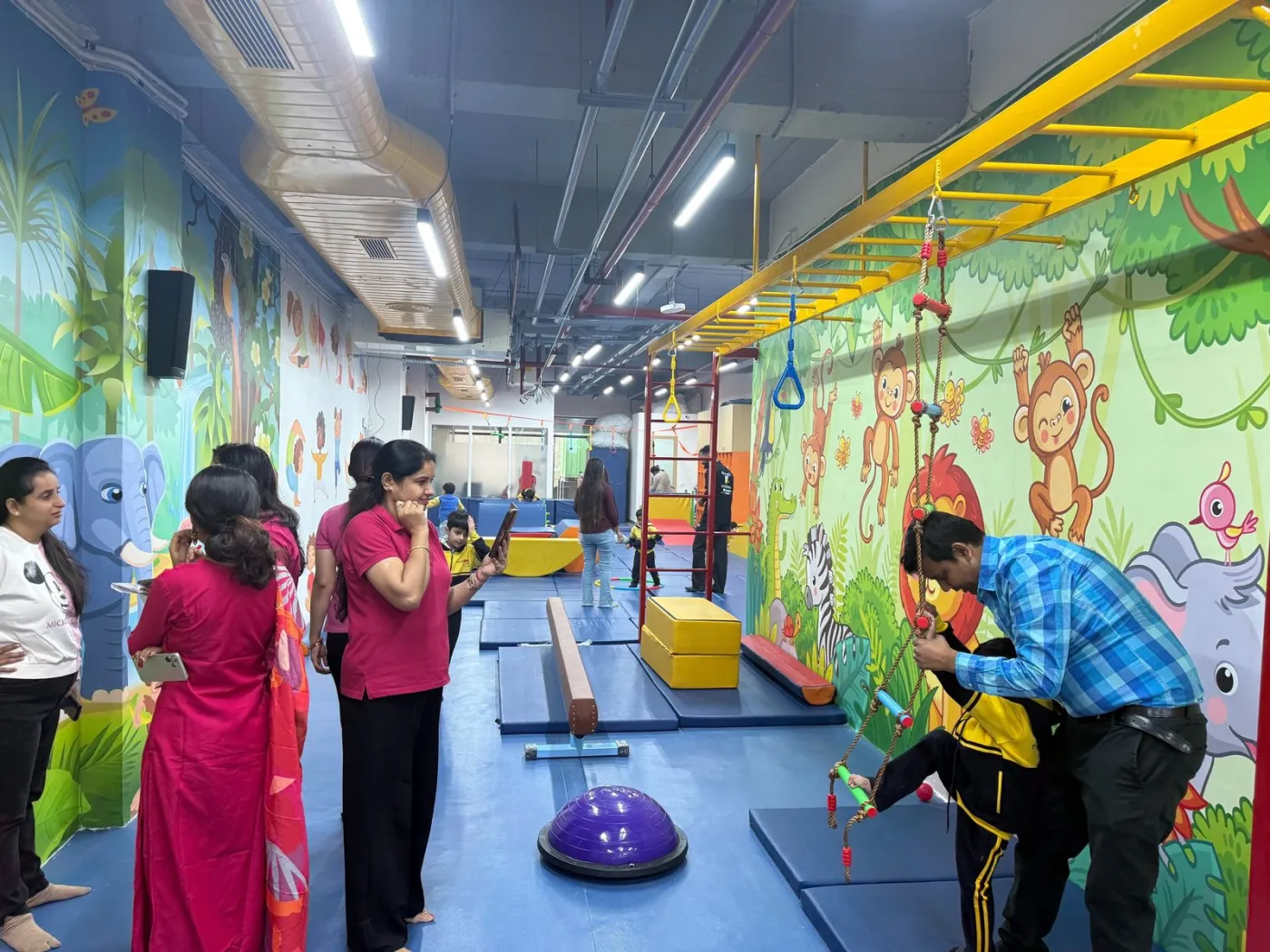
There is also something more physical going on. A child who knows what their body can do — that they can hang, climb, balance, land safely — carries themselves differently. They approach a climbing frame, a sports day, an unfamiliar room full of people from a different starting position.
Core strength, flexibility, balance and coordination are the visible outputs of age-appropriate gymnastics. Feeling capable in your own body is the invisible one, and it is the one that lasts.
Why the environment decides whether any of this works
All of the above only holds in a setting where failure is safe. In a ranked, competitive environment the children who most need confidence learn something else entirely: that participating means being publicly worse than someone. They opt out, and they are usually the ones who needed it most.
This is why our sessions are deliberately non-competitive, and why the award moment at the end recognises effort and improvement rather than winning. A beginner gets recognised as readily as the child who already cartwheels. It is not softness — it is what keeps the child furthest behind in the room long enough to stop being furthest behind.
What parents notice first
Rarely strength. Usually this: a child who volunteers to try things, who talks to new children more easily, who copes better with getting something wrong the first time.
None of that is accidental. The affirmations at the start, the greetings circle, the partner tasks and the award at the end are curriculum, not decoration — and they are doing as much work as the apparatus.