Your child's first gymnastics class: what actually happens
Nobody enjoys walking into something unfamiliar with a child in tow. Here is what a first session looks like, from getting ready at home to the conversation on the way back, so you can arrive knowing the shape of it.
Short answer: In a first gymnastics class, your child joins a real session rather than being shown round. At GrowStrong that means 75 minutes in five stages: affirmations, a hello circle, a warm-up, a themed activity and an award moment. Dress them in clothes they can roll in, arrive a few minutes early, and expect to watch the whole class from the side.
What happens in a first gymnastics class?
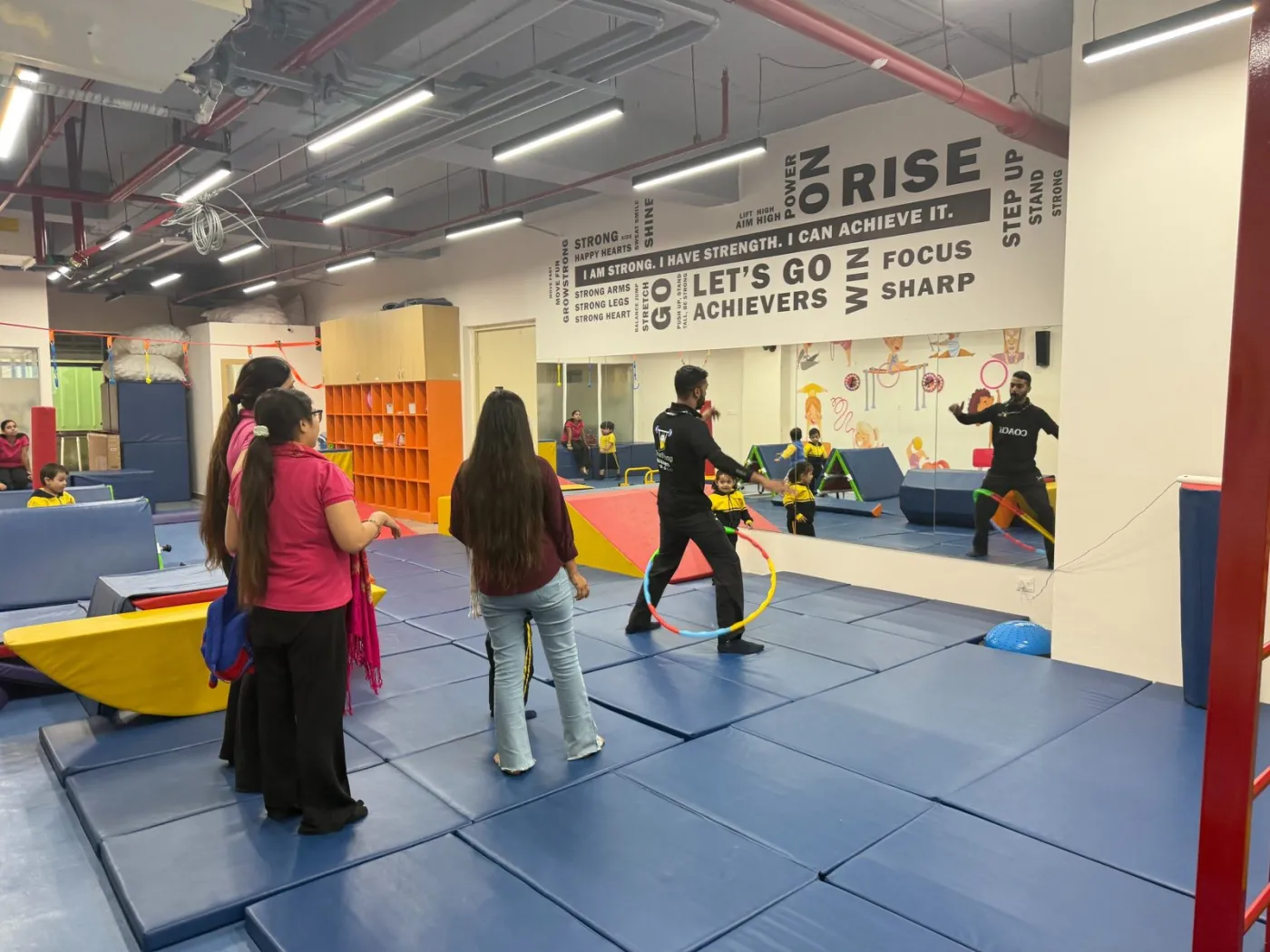
In a first gymnastics class, your child takes part in a normal session with children of a similar age while a coach watches how they move. Nothing special is staged for newcomers and nothing particular is expected of them. It is a real class, which is what makes it a fair trial for both of you.
Every GrowStrong class lasts 75 minutes and follows the same five stages in the same order. Only the theme changes from week to week, so the hour starts to feel familiar after a visit or two.
- Affirmations. Each child says one thing they are good at, which sets a friendly tone before anything physical starts.
- Social greetings. A hello circle in which your child is greeted by name and greets someone back.
- Warm-up. Light, playful movement that raises the heart rate and loosens the body before harder work.
- Themed activity. The main part of the hour: gymnastics drills, obstacle work and a craft task, all tied to the week's theme.
- Award moment. A short ceremony that recognises effort and improvement, so a first-timer can share in it as fully as anyone.
For two- and three-year-olds the session is gentler still, with soft-play and low apparatus only. Our guide to classes for 2-year-olds looks at what suits a toddler.
How do I prepare my child for their first gymnastics class?
Prepare your child by telling them simply what will happen, a day or so beforehand, without turning it into a big event. A rough picture helps: there will be other children, a coach who will say hello, mats and things to climb, and you will be there watching.
Avoid promising that it will be easy or that they will be brilliant at it. Saying they can try things and see what they like takes the pressure off. If they ask whether they have to do everything, it is fine to tell them they can watch for a minute before joining in.
On the day, keep the hour before calm. A trip to the toilet before you leave and enough time that nobody is rushing both help a child walk in ready. Aim to arrive a few minutes early, because walking into a room that is already busy is harder than being there as it fills, and the spare minutes let your child look at the equipment before anything is asked of them.
What should my child wear to gymnastics?
Your child should wear comfortable, stretchy clothes they can bend, roll and climb in, such as a T-shirt with track pants, leggings or shorts. Sessions are barefoot on padded flooring, so there is no need for shoes or special kit. Zips, buckles and stiff denim all get in the way.
- Tie long hair back before the warm-up, with soft bands rather than hard clips
- Leave jewellery, watches and hair accessories at home
- Bring a water bottle with your child's name on it
- Coming from school? Pack a change out of uniform
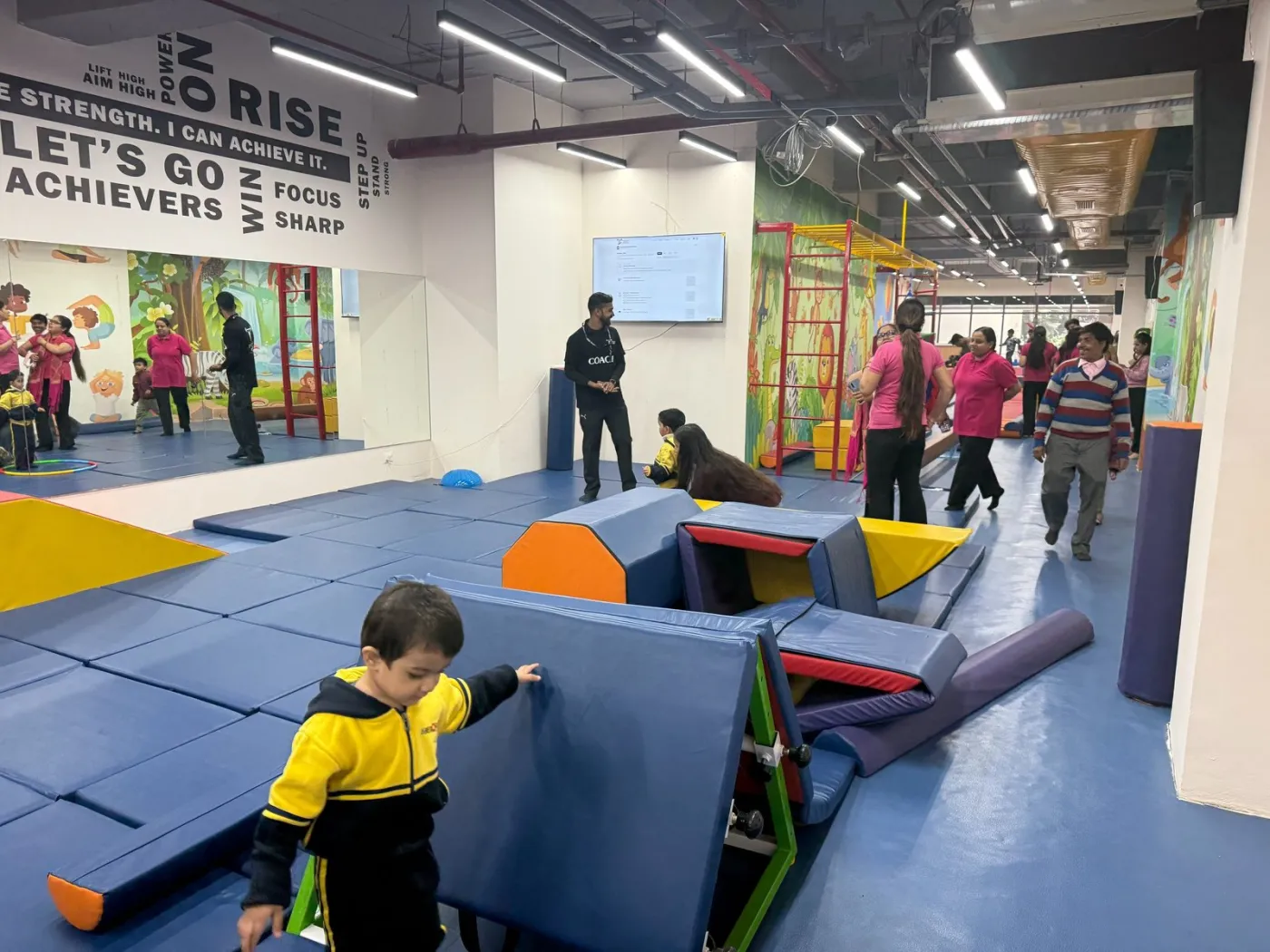
A loose dress or a long kurta can catch when children climb or hang, so for a first visit choose something closer-fitting. Nothing needs to be bought specially for the trial.
What does the coach need to know about my child?
The coach needs to know anything that would change how they look after your child, ideally when you book the free trial and again briefly when you arrive. That includes asthma, allergies, a recent illness or injury, any condition that affects movement, and whether your child is nervous in new places. None of it is unusual, and all of it helps.
It is also worth mentioning what your child already enjoys, whether that is climbing everything in the society park or never sitting still at home. Coaches use that to find a way in.
If your child has a medical condition or is recovering from an injury, check with your paediatrician that they are ready for a physical class before the trial.
Where should I be while my child is in the class?
You should stay and watch the whole of a trial class from the side, because seeing a complete session is the point of it. Sit where your child can see you, and try not to react much when they glance over. Children check a parent's face to read the situation, and a relaxed one tells them all is well.
Resist calling out instructions or encouragement from the side. It splits your child's attention between you and the coach, and it can make a hesitant child feel watched rather than supported. A smile when they catch your eye is plenty.
Once your child has started regular classes, ask the centre team how watching works for their age band.
What if my child cries or won't join in?
If your child cries or refuses to join in at first, treat it as a normal reaction to somewhere new rather than a sign the class is wrong for them. Tears at a first class are common, and the opening few minutes are usually the hardest.
What tends to help:
- Stay calm and stay put; leaving suddenly can make a worried child more worried
- Let them watch from the edge for a while, since many children join in once they have seen a round
- Let the coach do the coaxing, rather than adding pressure from the side
- Skip bribes and comparisons with other children, which tend to raise the stakes
One reluctant session tells you very little. If your child is still unsettled after a few classes, tell the coach and talk through what might help. We have written about this in more depth in what actually helps a shy child join in.
What should I watch for during the class?
Watch how the coach treats your child rather than how well your child performs, because a first session says little about ability. These are better things to notice:
- Did the coach spot when your child could not do something, and offer a version they could?
- How much of the hour was your child moving, and how much queuing?
- Did anyone use your child's name?
- Was the award moment about effort, so that a newcomer could be part of it?
- At the end, did your child look tired, pleased or curious about coming back?
If you are weighing up more than one centre, our checklist for choosing a kids' gym covers what else to look at and what to ask.
What happens after the trial class?
After the trial class, the coach tells you which age band they would place your child in and why, and then the decision is yours. Placement comes from watching how your child moves and how they are with the group, so it is sometimes not the band their birthday suggests. The reasoning is worth asking about, and our guide to what age to start gymnastics explains what each band is for.
There is no obligation to sign up. If the class is not right for your child, we would genuinely rather you knew on day one than three weeks in. If it is, the next choices are which batch fits your week and how often to come. The Centre Programme page sets out the five age bands, and our guide to how many times a week to do gymnastics covers frequency.
Expect your child to be tired that evening, and possibly hungry. That is the session doing its job.
Questions parents ask
Should my child have a snack before class?
A light snack an hour or so before class usually works better than a full meal or an empty stomach. Rolling and hanging on a full tummy is uncomfortable, while a hungry child tends to run out of energy halfway through. A banana, a few biscuits or a small bowl of poha is plenty, with a few sips of water on the way.
Is it all right to bring my child straight from school?
Coming straight from school is fine for most children, provided they have eaten something and had a few minutes to switch off on the way. A long school day does leave some children drained by the afternoon. If yours is usually exhausted at that hour, ask the centre whether a different time of day might suit a first visit better.
Should I ask my child how they did?
Ask your child what they enjoyed rather than how they did, because a first class is about how it felt, not how they performed. An open question about their favourite part usually gets more than a yes-or-no one. Avoid comparing them with other children in the group. If they want to go back, that matters more than anything you noticed from the side.
Is it normal for my child to ache the next day?
A little stiffness in the arms, shoulders or legs a day or two after a first class is normal, especially for a child who has not done much climbing or hanging before. That kind of mild ache usually eases on its own within a few days. Sharp pain, swelling, a limp or pain that keeps getting worse is different, and should be checked by a doctor.
Should we still come if my child is unwell on the day?
If your child is unwell on the day of the trial, keep them at home and move the session rather than pushing through. A child with a fever, a heavy cold or an upset stomach will not enjoy a physical class, and a miserable first experience is hard to undo. Ring or WhatsApp the centre on +91 99104 58324 to let them know and ask about another day.