Why gymnastics builds confidence in kids
Many parents first come to a kids' gym for strength and fitness. The change they end up describing is rarely about either. It is a child who now volunteers to try things.
Short answer: Gymnastics builds confidence because it gives children clear, personal evidence of progress: a shape they could not hold last month, they can hold today, and they know their own practice made the difference. In a non-competitive class that recognises effort, that evidence builds week after week, until a child believes that practice changes what they can do.
How does gymnastics build confidence in kids?
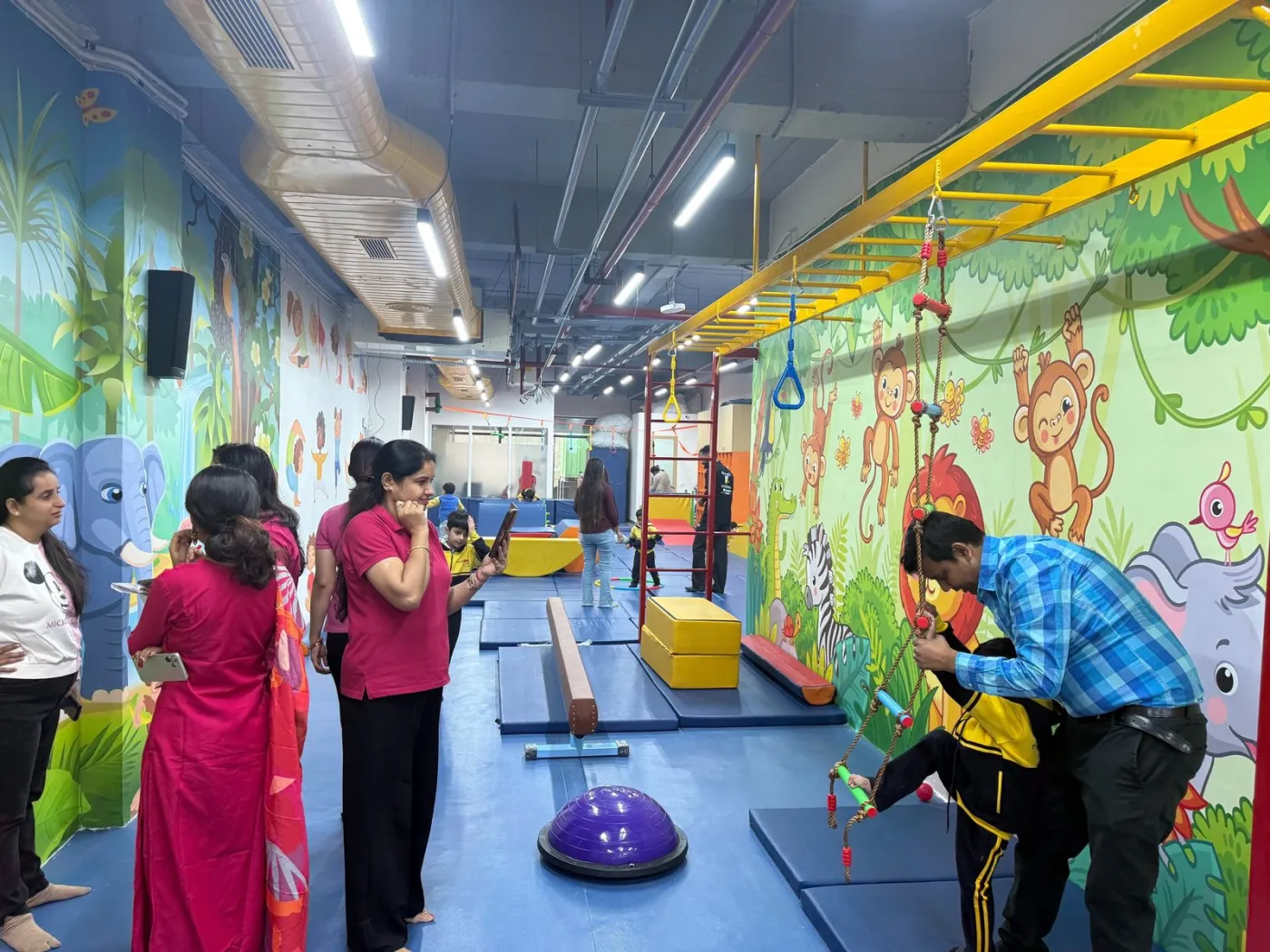
Gymnastics builds confidence by letting children collect proof, week after week, that effort changes what their body can do. The feedback is immediate and personal. You held the shape or you did not; you landed on your feet or you sat down. There is no teammate to share the credit with and nowhere to hide.
That sounds harsh, and it is the opposite. Because the standard is visible, so is the progress. A child who could not do something last week and can do it this week has evidence that belongs to nobody else — and evidence that their own practice caused it. The lesson is not “I am good at this”. It is “practice changed what I can do”, and once a child believes that, it stops being about gymnastics.
Age-appropriate gymnastics also builds core strength, flexibility, balance and coordination, which help a child feel capable in their own body. The physical gains and the self-belief grow together, each making the other easier.
Does praise build a child's confidence?
Praise builds lasting confidence when it describes what a child did — the effort, the strategy, the improvement — rather than labelling what they are. General praise such as “you are so clever” feels kind, but it gives a child nothing to hold on to when something goes wrong.
Research supports this. In a series of six studies, psychologists Claudia Mueller and Carol Dweck found that fifth graders who were praised for their intelligence, after a later failure, persisted less, enjoyed the task less and performed worse than children praised for their effort. Those praised for intelligence were also more likely to describe it as a fixed trait, while those praised for hard work believed it could improve.
A later study of the praise parents naturally give at home found a similar pattern in everyday family life: toddlers whose parents praised their effort between 14 and 38 months were more likely, at seven or eight, to see ability as something that grows with work. It was a small study, of 53 children, but it points the same way.
Children also notice when praise is automatic. “Well done” after every attempt soon means very little; “you kept your arms straight that time” means a great deal.
Why does visible progress matter for a child's self-belief?
Visible progress matters because a child believes what they can see for themselves far more readily than what they are told. Much of childhood progress is slow and abstract: reading improves over terms rather than weeks, and marks arrive long after the effort that earned them. In team games, credit is shared unevenly, and a quieter child can play a whole season without one moment that clearly belongs to them.
Gymnastics shortens that cycle. Try, wobble, adjust, try again — all inside a single session. A forward roll that went sideways at the start of term goes straight by the end of it, and the child was present for every attempt in between. Self-belief built on that kind of evidence tends to hold up on a bad day.
It also travels. A child who learnt on a mat that steady practice works can carry the same idea to a stubborn maths chapter, a music exam or, years later, board-exam preparation. Gymnastics will not do the studying for them, but it can give them a reason to believe the studying will pay off.
Can being physically capable make a child more confident?
Being physically capable often makes a child more confident, because a child who trusts their body meets new situations from a different starting point. A child who knows they can hang, climb, balance and land safely carries themselves differently in the playground, on sports day and in an unfamiliar room full of people.
The reverse is true too. A child who feels clumsy often stops volunteering for anything physical, falls further behind the children who keep practising, and starts saying “I'm not sporty” surprisingly early. Our article on whether your child is active enough lists the signs worth watching for, and our guide to gross and fine motor skills explains the building blocks underneath.
Strength and coordination are the visible results of age-appropriate gymnastics. Feeling capable in your own body is the invisible one, and it is the one that tends to last.
Is competition good for a child's confidence?
Competition suits some children and has its place, but early on it can teach the children who most need confidence that joining in means losing in public. When a class ranks children, the ones furthest behind learn quickly that every attempt is a comparison. They opt out — politely, with a sudden tummy ache or “I'm bored” — and they are often the children who needed the class most.
That is why GrowStrong sessions are deliberately non-competitive, and nobody is ranked against anybody. Children who love a challenge are not short-changed: they compete against their own last attempt, which is the one comparison that always means something.
None of this is an argument against competitive sport. If your child thrives on matches and medals, that is worth encouraging too. The point is the order: a child who has already learnt that practice works tends to be better placed to enjoy competing later.
What role do affirmations and awards play?
Affirmations and awards bookend every GrowStrong class, with each child naming something they are good at in the opening minutes and an award moment at the end that recognises effort and improvement rather than winning.
The affirmation asks a child to notice their own strengths instead of waiting to be told about them. For some children it may be the only time in the week they say out loud what they can do, and saying it gets easier with practice.
The award moment matters because of what it rewards. If awards went to the most capable child, the same few would collect them every week, and everyone else would learn they were not award material. Because effort and improvement are what count, a beginner can be recognised as readily as the most practised child in the room — which keeps the child furthest behind coming back long enough to stop being furthest behind.
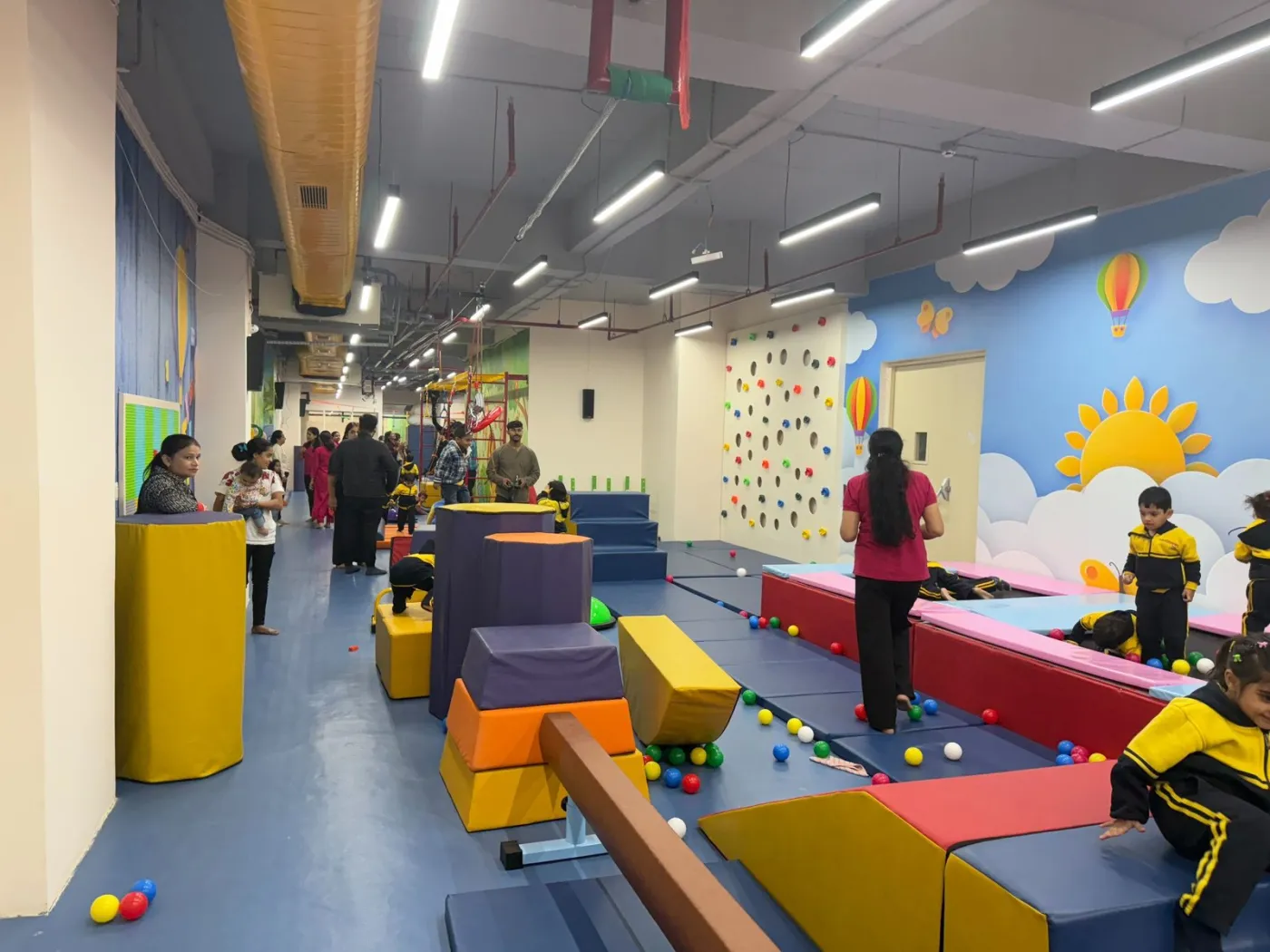
Between the two come the greetings circle, the warm-up and the themed activity, with its gymnastics drills, obstacle work and craft task. You can see how the five stages fit together in our Centre Programme. None of it is decoration; the social parts of the hour do as much for confidence as the apparatus.
How long before I notice a difference in my child's confidence?
There is no fixed timeline for building confidence, and every child moves at their own pace; the first changes are usually small, and they show in behaviour before they show in words. Look for shifts like these rather than a dramatic transformation:
- Trying something new on the second invitation instead of the fifth
- Talking to an unfamiliar child without being prompted
- Coping better with getting something wrong the first time
- Mentioning something they learnt in class, unasked
- Asking whether today is a gym day
Regular attendance gives a child more chances to collect evidence, so consistency matters more than any single great session. And if your child seems persistently anxious, withdrawn or low, that is different from ordinary hesitation, and worth raising with your child's paediatrician.
How can I build my child's confidence at home?
You can build your child's confidence at home by praising specific effort, letting them struggle a little before you help, and giving them real responsibilities they can manage.
- Praise the process, specifically. “You tried three different ways to fit that piece” teaches more than “clever girl”.
- Wait before rescuing. Count to ten before you step in to fix the shoelace, the puzzle or the zip.
- Give them a job that is genuinely theirs, such as packing their own bag for class or feeding a pet.
- Talk about your own mistakes. Hearing that you got something wrong and tried again makes it normal.
- Let them overhear you. Telling a grandparent on the phone that your child practised their roll all week lands differently from praise said to their face.
If your child is shy as well as unsure of themselves, the two need slightly different handling, and our guide to helping a shy child join in covers the shy side. And if you would like to see how your child responds to a class built around all of this, book a free trial and watch the whole session.
Sources
- Praise for intelligence can undermine children's motivation and performance — Mueller & Dweck, Journal of Personality and Social Psychology, 1998
- Parent praise to 1- to 3-year-olds predicts children's motivational frameworks 5 years later — Gunderson et al., Child Development, 2013
Questions parents ask
What are the signs of low confidence in a child?
Common signs of low confidence in a child include refusing to try new things, announcing they can't do something before trying, giving up quickly, avoiding being watched and needing constant reassurance. Every child shows some of these sometimes. A pattern that lasts for weeks, or shows up at home, at school and with friends at the same time, deserves gentle attention rather than alarm.
Is it normal for my child to get frustrated when a skill will not come?
It is normal for a child to get frustrated when a skill will not come, and it usually means they care about getting it right. What helps is naming the feeling, suggesting one small change to try, and allowing a short break if needed. A child who learns to stay with something hard a little longer each time is building exactly the kind of confidence that lasts.
Should I let my child stop gymnastics when it gets difficult?
It is usually wiser to let a difficult patch pass before deciding whether your child should stop, because quitting at the hardest moment teaches that discomfort ends things. Agree on a few more weeks, then decide together when everyone is calm. If the unhappiness is about something other than difficulty, such as the group or the timing, tell the coaches, because that is a different problem with a different fix.
Why is my child confident at home but quiet in public?
Many children are confident at home but quiet in public, because confidence depends partly on familiarity and on who is watching. At home a child knows the space, the people and the rules; a new place takes away all three at once. Regular time in a small, friendly group lets the outside world become familiar too, and the gap often narrows as it does.
What is the difference between confidence and self-esteem?
Confidence is a child's belief that they can do a particular thing, while self-esteem is how they feel about themselves overall. The two feed each other. A child with healthy self-esteem can still feel unsure on a balance beam, and growing confidence in one area, such as gymnastics, can gradually lift how a child sees themselves more broadly.